What It Does
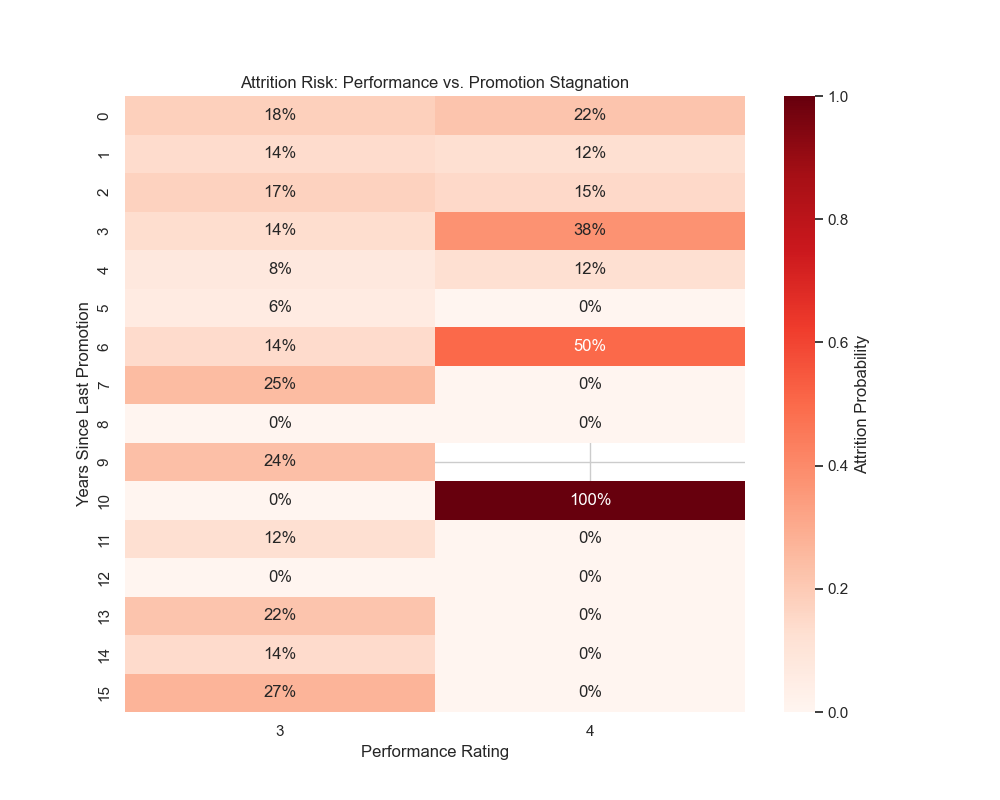
This project tests the “Stagnation Hypothesis”—the idea that people leave because they aren’t moving up. Using the IBM HR dataset, I analyzed the attrition rates of high potential employees based on their time since last promotion.
The Problem It Solves
Companies often view promotions as a “Retention Lock,” assuming a promoted employee is safe for at least 2 years. This false sense of security leads to a lack of support during the critical transition period.
How It Works
I performed a cohort analysis using Python (Pandas), segmenting high performers into “Stagnant” (>2 years without promotion) and “Propelled” (<2 years since promotion) groups and calculating their respective flight risk.
Key Findings
- The Promotion Paradox: “Propelled” high performers had a 17.0% attrition rate, compared to 13.7% for their “Stagnant” peers.
- Title Shopping: New titles make employees significantly more marketable to external recruiters.
- The Valley of Despair: The stress of a new role combined with “Mission Accomplished” syndrome increases vulnerability to poaching.
Results / Impact
Reframed the internal mobility strategy to include “Post-Promotion Onboarding” programs, treating internal movers with the same care and support structure as new external hires.
Tech Stack
| Layer | Technology |
|---|---|
| Analysis | Python (Pandas) |
| Visualization | Matplotlib |
| Data | IBM HR Analytics Dataset |